What do the bits, bit rate and sample rate of an audio file mean?
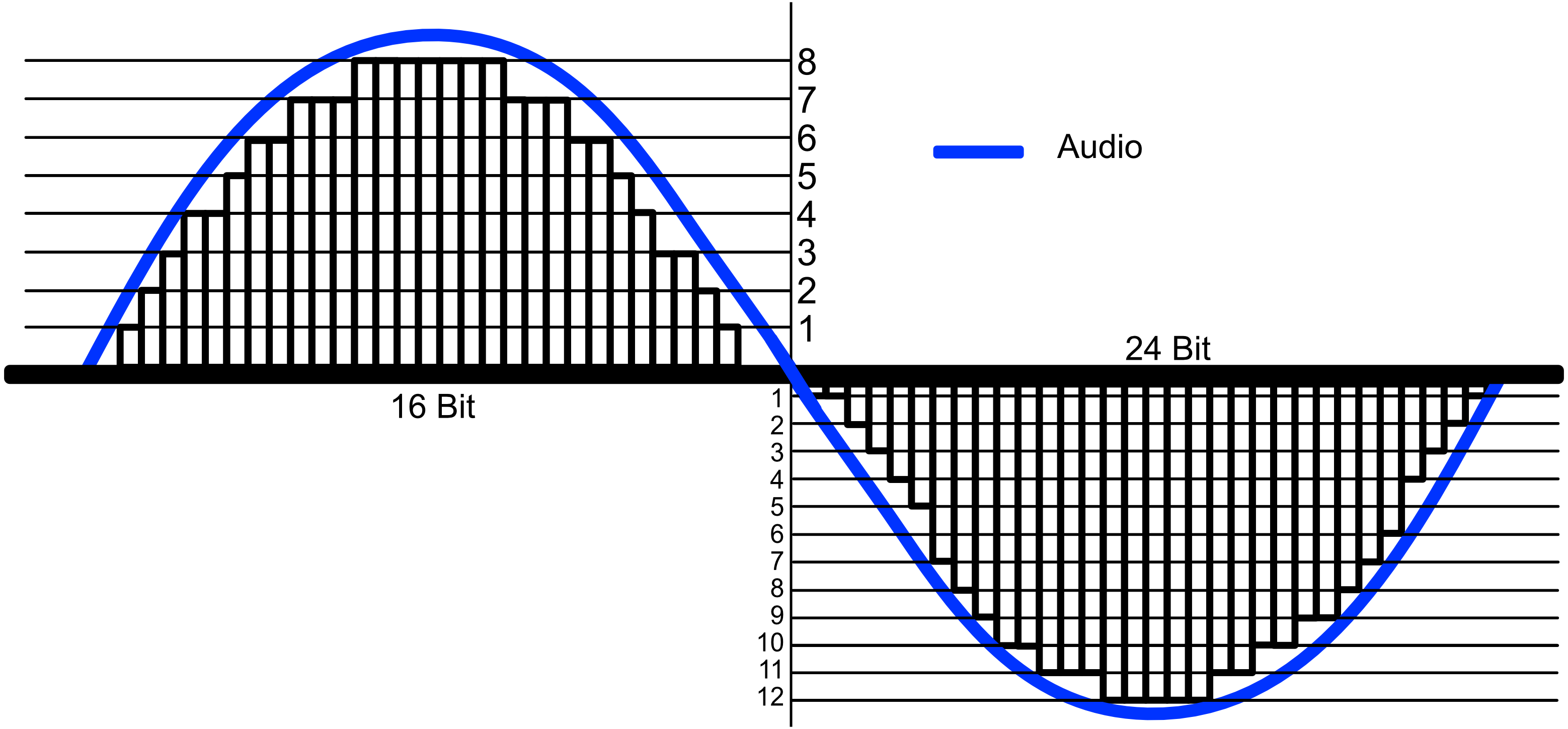
For example, the common mp3 format audio source is 16-bit 320 Kbps or Sony Hi-Res 24-bit 192 KHz.
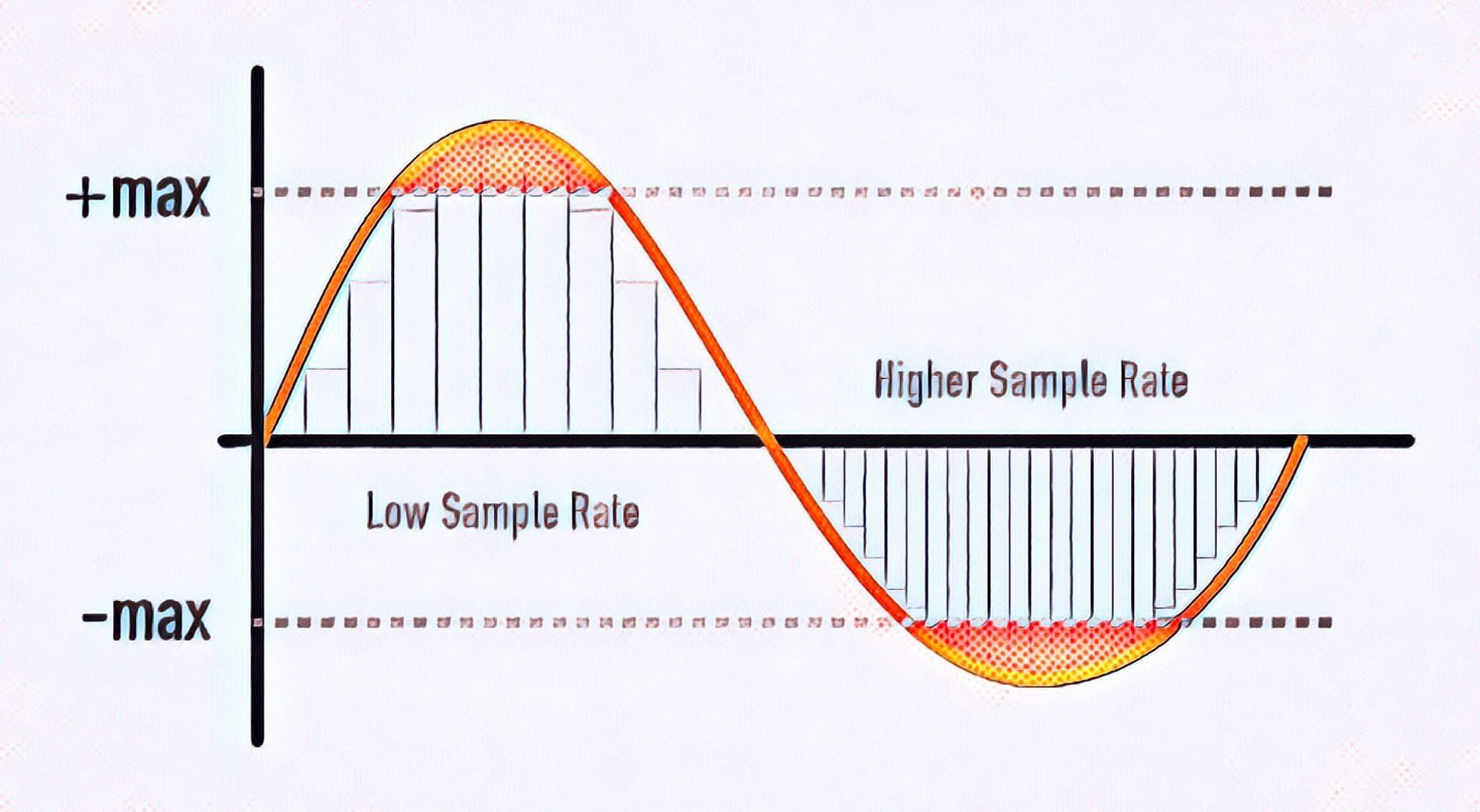
The stored sound data (for uncompressed PCM format) is equivalent to drawing a curve on graph paper, and its points can only be on the grid.
Then the sampling rate is how dense the grid is in the horizontal direction (how many grids per second); the number of digits is how dense the grid is in the vertical direction (how thin and how much storage each sample is stored), 16 Bit means that the range of values of each sample point is from 2 to the 16th, i.e. , from 0 to 65535. The code rate is the multiplication of the two (how much storage the samples take per second).
First, there are two cases, lossy and lossless. After figuring out lossless and lossless, we need to figure out the sample rate and bit depth. After calculating the sample rate and bit depth, we need to figure out the difference between the ratio of bit rate and bit depth to sample rate and its impact on audio quality.
In order to store a continuous physical signal (well, tell me about Planck’s constant…) in a computer, it must be converted to a digital signal. In acoustics, a digital signal is a digital representation of the amplitude of the sound wave at any moment.
Sound waves are longitudinal waves, which are difficult to draw. The following figure is replaced by transverse waves (the concept of longitudinal waves is the phenomenon that the density of air or other media changes regularly due to energy. The peaks represent high density, the troughs represent low density, and the horizontal line is the average density, i.e. silent state)
Using high school physics, waves contain two dimensions, one is intensity and the other is time. “Number of digits” indicates how many levels the sound wave is divided into from the strongest to the weakest; “Sampling Rate” determines the precision of the time axis or the sampling density, i.e. the length of time represented by each red dot, and the code rate is one second The number of dots on the clock, multiplied by the space that each point occupies.
So the so-called 24 bits consist of dividing the intensity of the sound wave by 2 at power level 24, occupying 3 bytes of space. Obviously, the finer the grade, the more details are restored.
The sample rate is generally 44100 Hz for CD (Hertz = times/second), 48000 Hz for DVD, and 96000 Hz as standard. As with the number of digits, the more points you get in a single second, the more details are restored. Why does CD take this value? Because the hearing range of the human ear is generally believed to be between 20 and 20,000 Hz. It is necessary to represent a peak and a valley, and at least two sampling points are required. So the CD can represent the sound of 22050 Hz at most, but this sound doesn’t have any detail, because if there are only two peak and trough points, the mean waveform is completely lost. Therefore, there will be a higher sampling rate.