
Color Space: RGB, YUV, and Chroma Subsampling

What is the difference between RGB, YUV, and chroma subsampling?
Understanding the concepts of color space, such as RGB, YUV, and chroma subsampling, is crucial in the world of digital imaging and video processing. Each of these terms represents different ways of representing and encoding colors, and they play a significant role in the quality and efficiency of image and video reproduction.
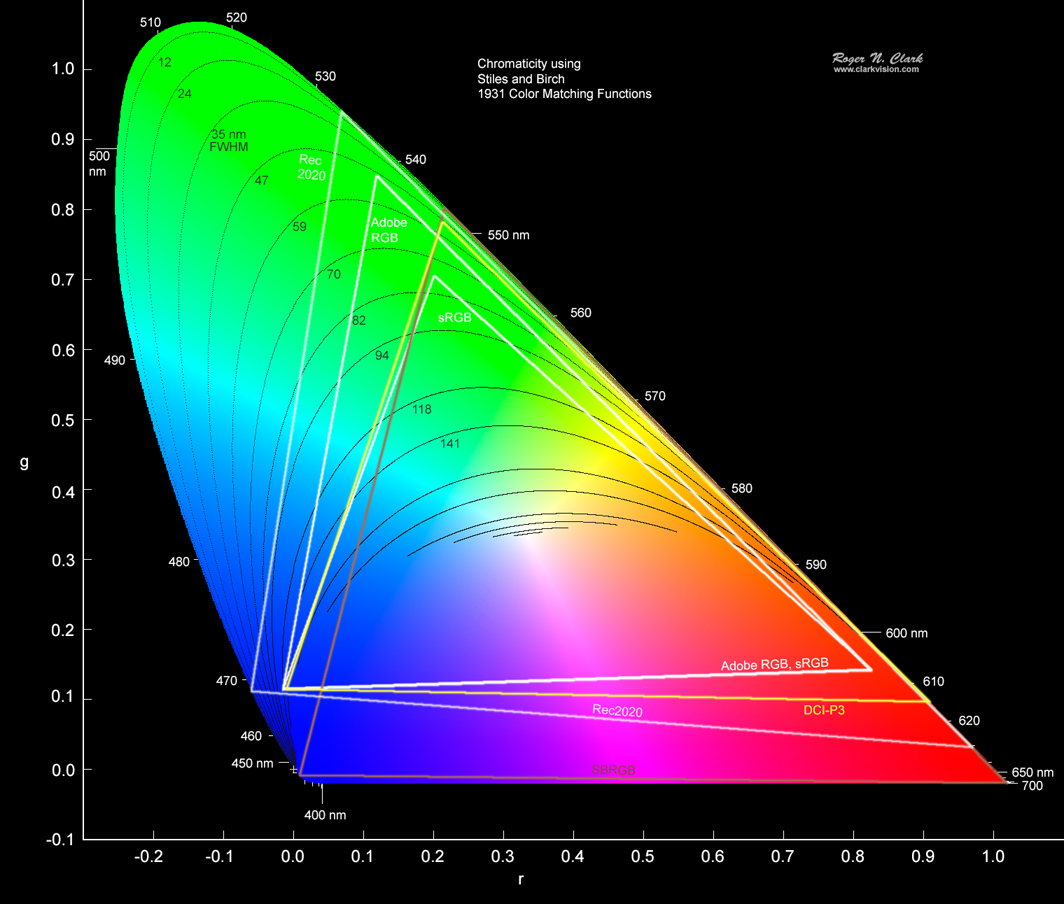
RGB (Red, Green, Blue) is an additive color model widely used for displaying images and videos on electronic devices. In this model, each pixel is represented by three color channels: red, green, and blue. The combination of different intensity values in these channels creates a wide range of colors. RGB color space is commonly used in computer graphics, digital cameras, and display technologies.
On the other hand, YUV (luma, chroma) is a color space that separates the luminance (Y) and chrominance (U, V) information of an image or video. The Y channel represents the brightness or grayscale component of the image, while the U and V channels contain color difference information. YUV is used primarily in video compression and transmission systems, as it allows for efficient representation of color information while reducing bandwidth requirements.
Why is chroma subsampling important in video compression?
Chroma subsampling is a technique used in video compression to reduce the amount of data required to represent color information accurately. It takes advantage of the human visual system’s lower sensitivity to color compared to brightness.
Chroma subsampling works by reducing the resolution of the chrominance (color) information while preserving the full resolution of the luminance (brightness) information. This process involves averaging color values across multiple pixels, resulting in a lower amount of color data compared to the original image or video. The subsampling is expressed as a ratio, such as 4:2:2 or 4:2:0, where the first number represents the full resolution of the luminance component, and the subsequent numbers represent the reduced resolution of the chrominance components.
The choice of chroma subsampling ratio depends on the specific requirements of the application. For example, in professional video production, a 4:4:4 chroma subsampling ratio is often preferred to maintain the highest possible color fidelity. However, in consumer video formats and broadcasting, lower subsampling ratios like 4:2:2 or 4:2:0 are commonly used to reduce file sizes and transmission bandwidth while still maintaining acceptable visual quality.
The impact of color space and chroma subsampling on image and video quality
The choice of color space and chroma subsampling can significantly affect the quality of images and videos, particularly in scenarios involving compression, transmission, and display. Let’s explore their impact:
1. Color accuracy and reproduction: RGB color space offers a wide gamut of colors and is well-suited for applications that require precise color representation, such as photo editing and computer graphics. YUV color space, with its separation of luminance and chrominance, allows for efficient representation of color information while maintaining good perceptual quality.
2. Bandwidth and storage efficiency: Chroma subsampling reduces the amount of data required to represent color information, resulting in smaller file sizes and lower bandwidth requirements. However, more aggressive subsampling ratios can lead to a loss of fine color details, especially in areas with rapid color transitions or fine textures.
3. Compression artifacts: In video compression, excessive chroma subsampling or inappropriate color space conversions can introduce compression artifacts, such as color bleeding, color banding, or loss of detail. These artifacts may become more noticeable when working with highly compressed video formats or when repeatedly compressing and decompressing the content.
4. Compatibility and display capabilities: Different devices and systems have varying support for color spaces and chroma subsampling ratios. It is essential to ensure compatibility between the color space used in content creation and the capabilities of the playback or display devices to avoid color inaccuracies or limited color reproduction.
Final Words
Understanding color space, chroma subsampling, and their impact on image and video quality is crucial for professionals working in the field of digital imaging and video processing. By choosing the appropriate color space and subsampling ratio, one can achieve accurate color reproduction, efficient data compression, and optimal visual quality in various applications. It is important to consider the specific requirements of each project and ensure compatibility between the chosen color space and the capabilities of the target devices.
Keywords (LSI): digital imaging, video processing, color representation, additive color model, color difference information, video compression, transmission bandwidth, color fidelity, perceptual quality, compression artifacts, file sizes, compatibility, display devices, visual quality.

