
Audio compression, how it works Part 2

Redundant information for transmission signals
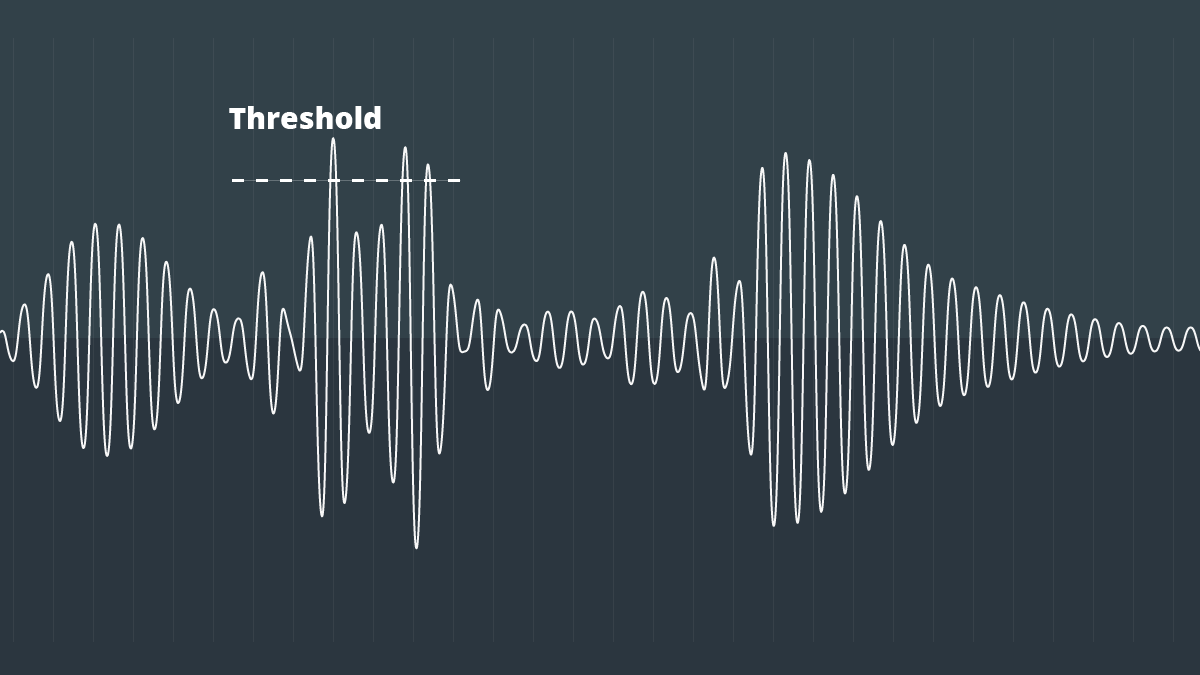
Digital audio compression coding compresses the audio data signal as much as possible on the premise of ensuring that the signal is not audibly distorted. Digital audio compression coding is implemented by removing redundant components in sound signals. So-called redundant components refer to signals in the audio that cannot be perceived by the human ear and do not help determine the timbre, pitch, and other information of the sound. Redundant signals include audio signals outside the range of human hearing and masked audio signals. For example, the frequency range of the sound signal that can be perceived by the human ear is 20 Hz to 20 KHz, and frequencies other than this frequency that cannot be detected by the human ear can be considered as redundant signals. In addition, according to the physiological and psychoacoustic phenomena of the human ear, when a strong signal and a weak signal exist at the same time, the weak signal will be masked by the strong signal and cannot be heard, so the weak signal can be regarded as a redundant signal. Do not send. This is the masking effect of human hearing, which is mainly manifested in the spectral masking effect and the time-domain masking effect, which are presented below:
Spectral masking effects.
After the sound energy of a frequency is below a certain threshold, it will not be heard by the human ear, and this threshold is called the minimum audible threshold. When another sound with higher energy appears, the threshold value close to the frequency of the sound will increase considerably, which is known as the masking effect.
Masking effects in the time domain.
When strong and weak signals appear at the same time, there is also a masking effect in the time domain. That is, when the two occur very close in time, the masking effect will also occur. Time-domain masking is divided into three parts: pre-masking, simultaneous masking, and post-masking. Pre-masking refers to the short time before the human ear hears a strong signal, the already existing weak signal will be masked and cannot be heard. Simultaneous masking means that when a strong signal and a weak signal exist at the same time, the weak signal is masked by the strong signal and cannot be heard. Post-masking means that when the strong signal disappears, it takes a long period of time to hear the weak signal again, which is called post-masking. These weak masked signals can be considered redundant signals.


