
What do the bits, bit rate and sample rate of an audio file mean? Part 2
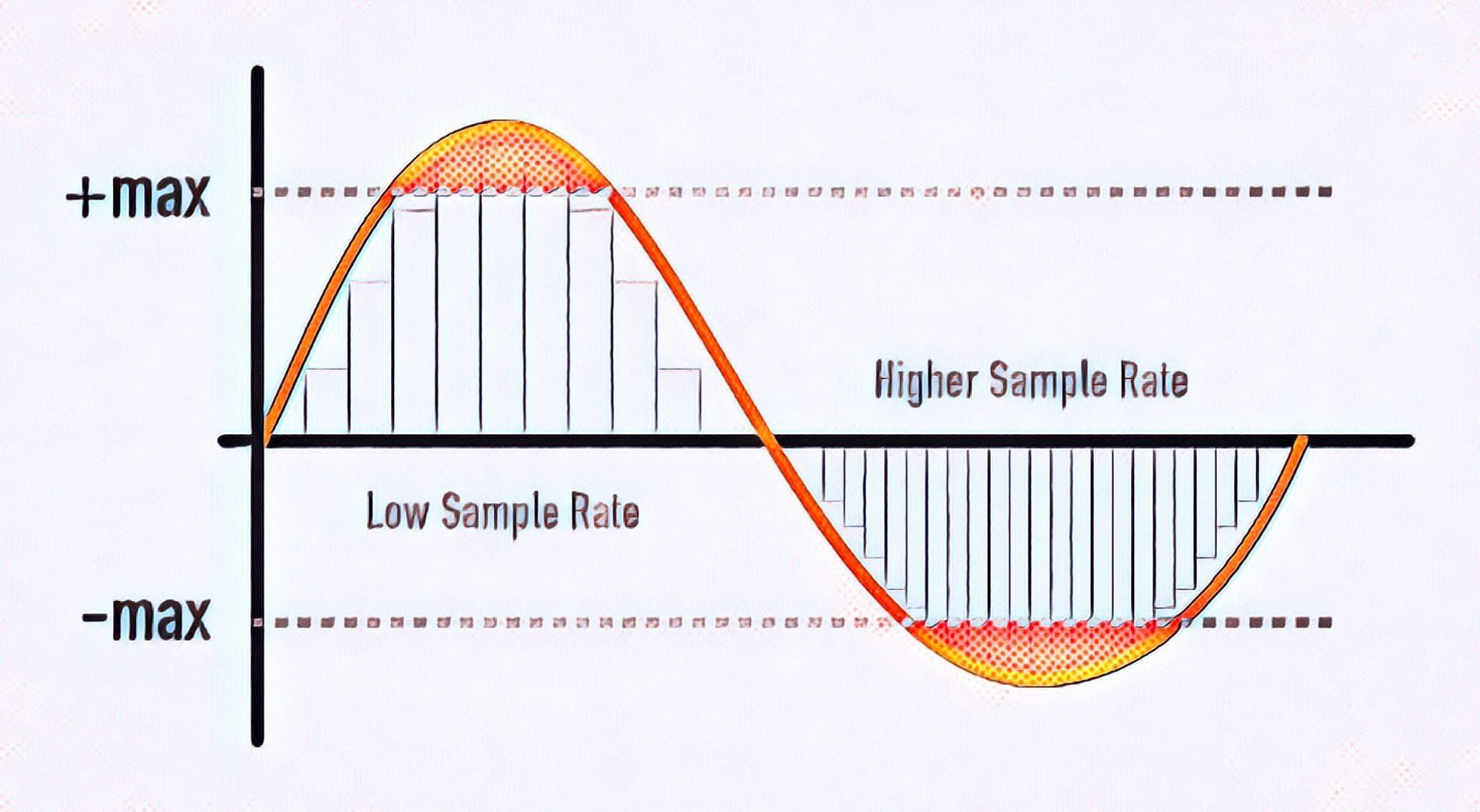
If it’s in a lossless uncompressed format, the bit rate is strictly equal to the number of bits * sample rate * number of channels. And typically, the MP3 bitrate you can see just represents how much capacity the format needs to describe this one second of audio.

MP3 is a lossy compression. In the compression process, some information is lost, but the lost information cannot be represented by the number of bits and the sampling rate. In general, the higher the bit rate, the less information will be lost. Mathematically, bitrate and sound quality are proportional. As for whether you can hear it or not, it depends on many factors. The MP3 algorithm is not complicated, of course, to understand it you have to learn what the Fourier transform is.
There is also lossless compression (representing APE, FLAC, etc.), which also has a bitrate, and this bitrate has nothing to do with sound quality. It also describes how much capacity the file uses to describe one second of audio content, but the same audio content can be compressed to different sizes (compression ratios), similar to zip compression ratios. No matter how big you compress it, in the end it can be restored to the same file. So if you see who is chasing lossless bitrate, you can basically conclude that the product is a bad pen.


