
Definition of sampling bits, sampling rate and bit rate in audio (transfer)
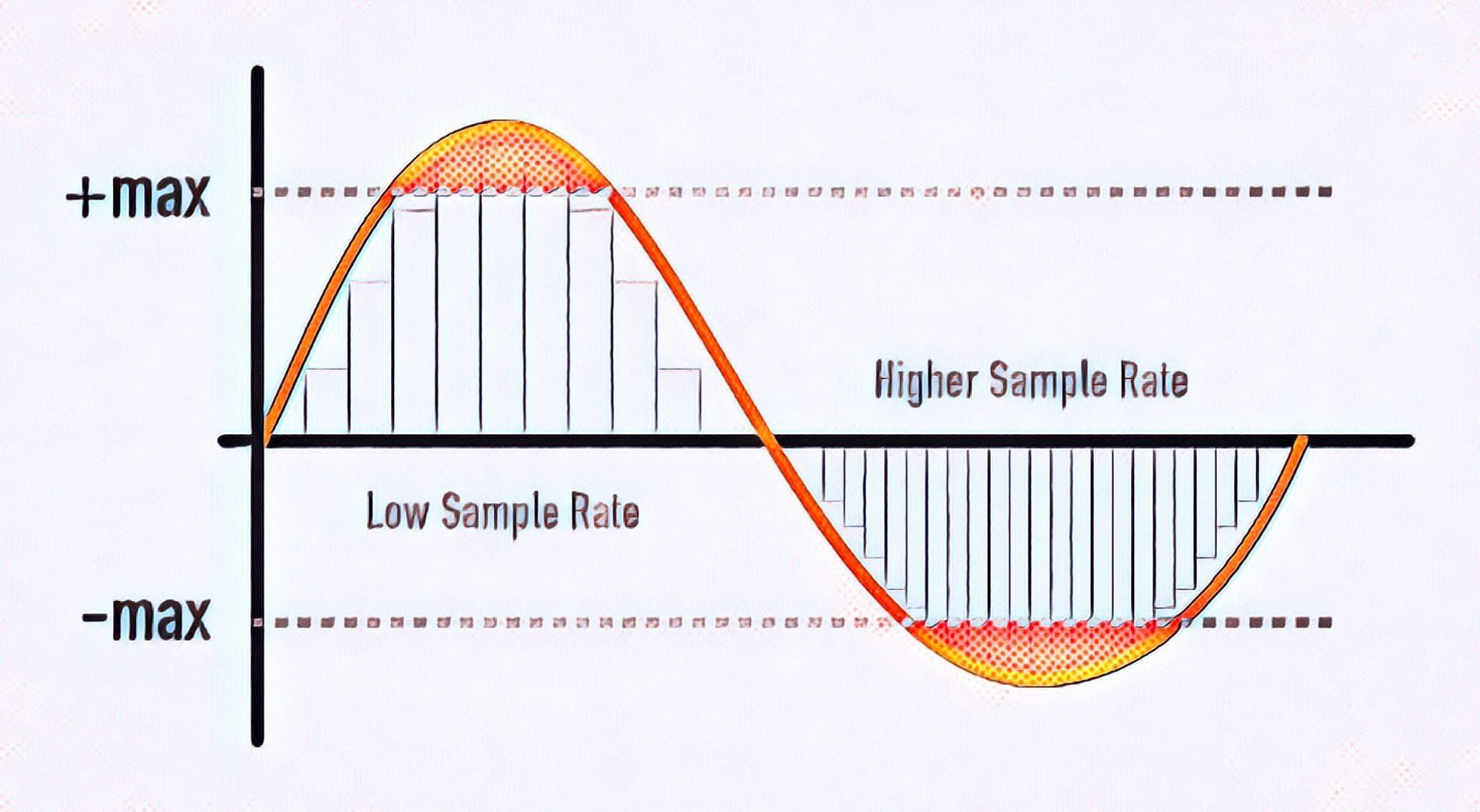
Number of samples (sample size):

The number of sampling bits can be understood as the resolution of the sound processed by the capture card. The higher the value, the higher the resolution and the more realistic the sound recorded and played back. The first thing we need to know: sound files on the computer are represented by the numbers 0 and 1. So the essence of recording on the computer is to convert the analog sound signal into a digital signal. On the contrary, during playback, the digital signal is restored to an analog sound signal output. The capture card bit refers to the binary digits of the digital sound signal used by the capture card when capturing and playing sound files. The bits on the capture card objectively reflect the accuracy of the digital sound signal’s description of the input sound signal. 8 bits represent the eighth power of 2–256 and 16 bits represent the sixteenth power of 2–64K. For comparison, for the same musical data, a 16-bit sound card can divide it into 64,000 precision units for processing, while an 8-bit sound card can only process 256 precision units, resulting in a large loss of signal. sampling effect is naturally incomparable.
It is usually said in the market, 16bit/24bit/32bit. The higher the value, the better the sound.
Sampling rate:
Sample rate (also called sample rate or sample rate) defines the number of samples per second taken from a continuous signal to form a discrete signal, and is expressed in hertz (Hz). The inverse of the sample rate is called the sample period or sample time, which is the time interval between samples. The sampling theorem states that the sampling frequency must be greater than twice the bandwidth of the sampled signal. Another equivalent statement is that the Nyquist frequency must be greater than the bandwidth of the sampled signal.
If the signal bandwidth is 100 Hz, the sample rate must be greater than 200 Hz to avoid aliasing.
In other words, the sampling frequency must be at least twice the frequency of the largest frequency component of the signal; otherwise the original signal cannot be recovered from the signal samples. Oversampling refers to the sampling rate that exceeds twice the bandwidth of the signal, so that the poorly performing analog anti-aliasing filter can be replaced with a digital filter.
Bit rate:
Bitrate refers to the sampling rate at which digital sound is converted from analog to digital format. The higher the sampling rate, the better the quality of the restored sound. As a benchmark for the efficiency of digital music compression, bit rate indicates the rate of the number of bits bps (bit per second, bits per second) transmitted per unit of time (1 second). Kbps (in layman’s terms is 1000 bits per second) is usually used as the unit. The digital music bitrate on CD is 1411.2 kbps (ie, to record 1 second of CD music, 1411.2 × 1024 bits of data are required). time unit (1 second) The amount of data (BIT) is large, which means the sound quality of the music file is good. However, when the BITRATE is high, the file size increases, which will occupy a large amount of memory capacity. they are 32-256 Kbps. Of course, the wider the rate, the better, but 320 Kbps is the highest level at the moment.


