
Video Bitrate Comparison: Understanding Bitrate for Better Video Quality

What is Video Bitrate?
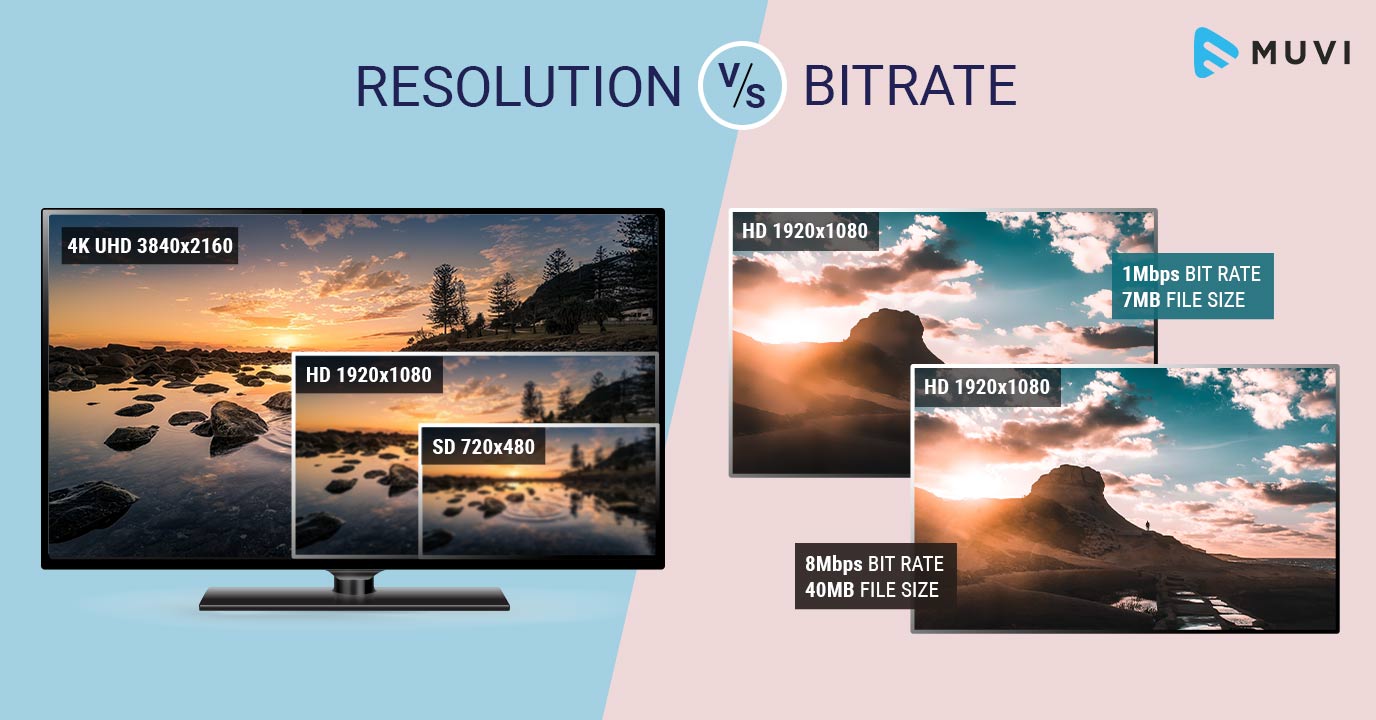
Video bitrate refers to the amount of data used to represent a video stream over a specific time. It is measured in bits per second (bps) or kilobits per second (kbps). In simple terms, bitrate determines the amount of information that a video stream contains. The higher the bitrate, the more data contained in the video, resulting in better quality.
Video Bitrate Comparison: What Factors Affect Bitrate?
Several factors affect video bitrate, including the resolution, frame rate, codec, and compression method. The resolution refers to the number of pixels that make up a video’s image, while the frame rate is the number of frames displayed per second.
The codec determines how video is compressed and decompressed. Different codecs have varying levels of compression and quality. The compression method determines how the video data is compressed, and it can either be lossy or lossless.
Video Bitrate Comparison: What are the Different Bitrate Types?
There are two types of bitrates: constant bitrate (CBR) and variable bitrate (VBR). CBR ensures a consistent bitrate throughout the video, regardless of the content, resulting in predictable file sizes. VBR, on the other hand, adjusts the bitrate depending on the content complexity, resulting in variable file sizes.
Video Bitrate Comparison: What are the Recommended Bitrates?
The recommended bitrate depends on several factors, including the video resolution, frame rate, and codec. Higher resolutions, frame rates, and codecs require higher bitrates for optimal quality.
For example, for standard definition (SD) video (720×480), a bitrate of 2-5 Mbps is recommended. For high definition (HD) video (1920×1080), a bitrate of 5-10 Mbps is recommended. For 4K video (3840×2160), a bitrate of 20-50 Mbps is recommended.
Video Bitrate Comparison: What is the Impact of Bitrate on Video Quality?
The impact of bitrate on video quality is significant. A low bitrate results in a loss of detail, blockiness, and pixelation, resulting in a poor quality video. A high bitrate, on the other hand, results in a more detailed and smoother video, but it also requires more storage space and bandwidth.
Video Bitrate Comparison: How to Choose the Right Bitrate?
Choosing the right bitrate depends on several factors, including the intended use of the video, the available bandwidth and storage space, and the target audience’s devices.
For example, if the video is for online streaming, a lower bitrate is recommended to ensure smooth playback on devices with lower bandwidth. If the video is for high-quality playback on a large screen, a higher bitrate is recommended to ensure optimal quality.
Conclusion
In conclusion, video bitrate is a crucial factor that determines the quality of a video. Understanding bitrate and its impact on video quality is essential for creating, encoding, or compressing videos. By following the recommended bitrates and choosing the right bitrate for the intended use of the video, you can ensure the best quality video.


