DIGITAL SOUND QUALITY


Free Download Mp4Gain
picture

DIGITAL SOUND QUALITY
Sound Quality

What determines the quality of the sound?
Sound Quality

The vast majority of modern devices use digital technologies to play audio content. The list of parameters that affect digital sound quality includes many items. Below we have highlighted the most important ones.

Audio format. It is a kind of way that a sound file is presented.
The player you plan to use to listen to music.
DAC is a device for converting a digital signal into analog.
Amplifier of a sound signal.
Acoustic system or speakers.
Cables used to connect the elements of the system to each other.
Power quality.
A little theory
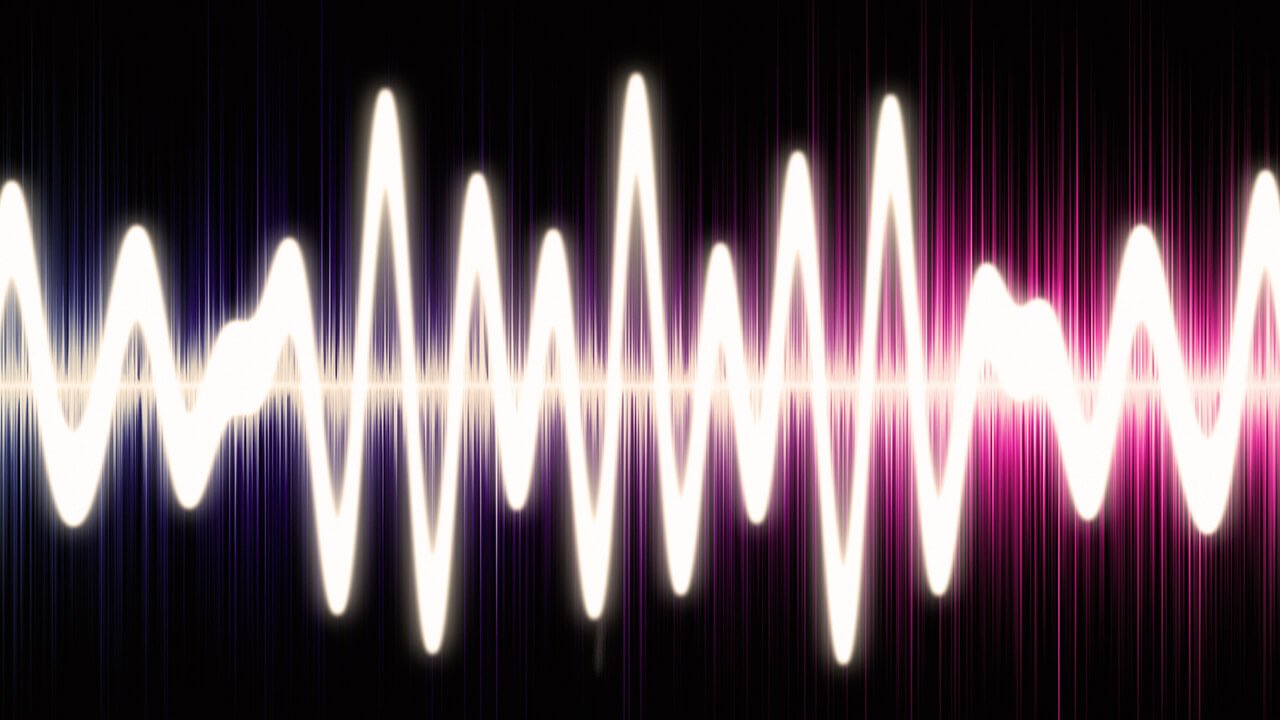
To build your home audio system more consciously, you need to have a basic understanding of the nature of analog and digital sound. The most visual representation of the difference between these signals is given by their graphic representation. An analog sound wave graph is a smooth sine-like line. The digital signal appears as a jagged line on the image. To digitize analog (or continuous) sound, an ADC, an analog-to-digital converter, is used. The conversion process consists of three stages. In the first, the original continuous signal becomes discrete when a smooth line on the graph is divided into points between which there is a certain interval. The smaller this interval, the higher the sampling frequency, which means that the original signal is repeated more accurately.

Format
All audio formats are divided into three types.

No compression. This includes WAV, AIFF, CDDA, and others. Audio tracks recorded in these formats have impeccable quality and sound as close to the original as possible. Its disadvantage is a lot of weight: a minute of recording can take up to 10 MB.

Lossless compression. This category contains FLAC, ALAC, APE formats. In this case, the sound is recorded with the same quality and takes up less space than in the uncompressed format. It is much more convenient to store such files, for example, on a personal computer.

Lossy compression. These are MP3, AAC, Ogg Vorbis formats, when, to reduce the amount of data, some information is cut, for example, about frequencies that are beyond the limits of human perception (the average person hears sounds in the range of 20-22,000 Hz).

Turntable
Today, the market offers a wide variety of digital audio track players. It is important to have a clear idea of ​​how you will listen to music and compile your music library: on a player, computer, using headphones or in some other way. That is, whatever is most convenient and affordable for you. According to most experts, anyone, even a very high-quality digital player, is inferior in saturation of the sound transmitted to vinyl players and even reel-to-reel tape recorders. And yet among digital technology, it is quite possible to choose a device with more than decent sound. It can be a CD player (like the Harman Kardon HD 990/230), a home computer, or a portable audio player. Using a computer or laptop in a home stereo system attracts because of its compact and inexpensive size. The external module is interesting for those

Signal converter
To convert a digital signal to analog, you need a DAC: digital to analog converter. The device can be integrated into the player or be a separate module. Integrated, as a rule, loses to modular in technical characteristics. The external DAC provides a separate, built-in power supply – it is powered from a common source with the player. As a result, interference arising from the playback device may affect the built-in converter. A separate module frees itself from these risks. The best practice is to use an external DAC when listening to content recorded in lossless formats. Such recordings are mainly distributed over the Internet, and if the computer is equipped with a low-end sound card, the sound will be mediocre. To get a good sound

Amplifier
If you have decided on the format and type of player, have bought a good DAC, it is time to move on to the choice of an amplifier, a device whose main function is to increase the level of the analog audio signals that are supplied to you. The amplifiers are tube and transistor. The former give a smoother iridescent sound, while the latter are sharper and more detailed. Which option is right for you, it is best to determine by evaluating the sound of each of them. Both tube and transistor amps have feedback and non-feedback models.


Free Download Mp4Gain
picture


Mp4Gain Main Window
picture


Mp4Gain Features
picture


Free Download Mp4Gain
picture

MP3 CO-INVENTOR CREATES A SOUND RATING

MP3 CO-INVENTOR CREATES A SOUND RATING

Sound Quality

Why CDs, SACDs, and Downloads are Ahead and FM Radio and Internet are Left Behind
Prof. Dr.-Ing. Dr. rer. nat. hc mult. Karlheinz Brandenburg, Head of the Department of Electronic Media Technology at TU Ilmenau, Director of the Fraunhofer Institute for Digital Media Technology (IDMT)
Prof. Dr.-Ing. Dr. rer. nat. hc mult. Karlheinz Brandenburg, Head of the Department of Electronic Media Technology at TU Ilmenau, Director of the Fraunhofer Institute for Digital Media Technology (IDMT) [Source: TU Ilmenau]

sound quality

“We can wage a real war of faith to get the best sound quality,” says MP3 co-inventor Prof. Dr. Karlheinz Brandenburg. Together with Meinungsbarometer.info, the researcher has created an exclusive and for the first time a sound ranking of all popular music playback formats. A test with surprising results.

Which medium, which transmission path offers the best sound theoretically / physically?
Sound quality is very subjective: what is still acceptable to one ears sounds strange to others. The quality that is heard also depends on the specific piece of music that is being listened to; some processes have clear weaknesses. When digital data reduction methods are used (i.e. streaming / downloading from portals / DAB / Internet radio / DVB), there is a massive dependence on the codec used (i.e. .mp3 or AAC or Dolby Digital or FLAC .. .), but also of the bit rate used. Basically the following applies: Theoretically, there are only restrictions on the perfect subjective quality for: streaming FM, LP and variants with data reduction with too low bit rate, i.e. .mp3 (some interference for certain music material are always audible). If all done correctly, the following methods work perfectly for listening tests: CD, SACD, Download / Stream using so-called “lossless” encoding methods (for example, FLAC), and AAC at high bit rates (as in iTunes Music Shop). The differences with DTS or Dolby Digital or .mp3 at 256 or 320 kbit / s are very small. Radio via DVB-C or DVB-S is often preferable to FM radio (because dynamic compression is not used), even if you listen to the same program.

How does it look in common practice?
We can wage a real war of faith for the best sound quality. Since the brain’s expectation plays an important role (“vinyl records sound better”), the answer will vary from person to person. We can identify some “quality sinners”: dynamic compression, bit rates that are too low, especially with Internet radio, some of which sound horrible, and errors in the encoders, which can cause audible interference depending on the playback device. My personal order (good to bad) with well-made recordings and corresponding bit rates is:

1) CD (the reference) / SACD / Download (lossless codec)

2) Download (good “lossy” codec)

3) Radio via DVB / streaming (depending on bit rate)

4) DAB + / LP

5) FM / Internet radio (relatively high bit rate, good codec)

6) Internet radio (wrong bit rate for codec)

Will data reduction music formats, such as mp3, lose importance in the future as increasing amounts of data can be moved on the Internet?
I’ve known the plot since 1983, before .mp3 was invented. There are still many applications where the amount of data transferred is economically important. Also, all end devices understand .mp3 so it will survive. On the other hand, data reduction music formats are now almost non-existent in the studio and in the feed.

What music formats and platforms do you think will gain relevance in the future and which ones will lose? Are there new music formats or platforms on the horizon?
“Object-oriented” music formats have been debated for 15 years. Now there is a transition to practice with Dolby Athmos in the cinema (which is already frequently found) and the MPEG-H standard for home and broadcast applications (still under discussion in the relevant committees). These formats not only allow for greater flexibility in terms of the playback arrangement (number and placement of speakers), but also much better surround sound than previous surround systems. Many such systems already exist in the field of large-scale sound reinforcement (Bregenz Festival, planetariums, opera). All of these examples can also be found as a research focus of our Fraunhofer Institute for Digital Media Technology.

We are currently seeing efforts to improve the sound quality of Internet radio and broadcast systems. Often this is less of a codec problem and more of an operational problem. We have lived for decades with the fact that FM radio sound is significantly affected by compressors (which make stations louder).