Audio codecs


Free Download Mp4Gain
picture

Audio codecs

Audio Codec

Codecs played at the same time, if not a key, a very important role in the development of technologies in the field of digital sound.
Audio Codecs

The rapid spread of mobile communications, Internet telephony, portable players – these are all examples of the use of codecs. It was only thanks to its invention and implementation that it was possible to transmit audio information through channels that were then very limited in bandwidth. This problem could be solved by increasing the capacity of all transmission channels, which would mean an incredible material investment associated with the remodeling and replacement of most of the elements of the existing infrastructure, or by developing an algorithm that can significantly reduce the amount of data. resulting from the analog to digital conversion and thus be able to use the existing infrastructure. The second way was much more sensible.

What are codecs?
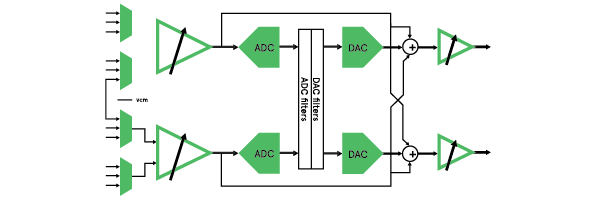
A codec is an algorithm based, as a rule, on one or another psychoacoustic model, which will be discussed below, and includes two modules: an encoder and a decoder.

The encoder encodes digital audio into a data stream, the volume of which, compared to the original volume of the raw material, is significantly lower. Depending on the codec used and the encoding parameters, it is possible to achieve an optimal balance between sound quality and the desired data volume.

However, to reproduce the sound encoded in this way, a decoder is required, whose task is to decode the digital audio stream back to the standard format (PCM).

Codecs and their families
In general, all codecs, of which there are very many at the moment, can be divided into two categories:

At a loss
As mentioned above, basically the codecs work based on one or another psychoacoustic model that determines which audio information is not key for our brain and could be sacrificed and discarded, thus reducing the amount of data. The disadvantage of this method is that when decoding said transmission, the lost audio information cannot be recovered. The compression ratio can reach up to 90% of the original data volume, while maintaining satisfactory sound quality for most normal users. The most prominent representatives of this family are the well-known and perhaps the most common MP3 and WMA.

No loss
In this case, the encoding occurs without data loss, allowing all the information in the original audio signal to be fully recovered after the decoding process. However, the degree of data compression that can be achieved with these codecs is much lower than that of the Lossy family of codecs. In general, depending on the encoding parameters, compression of up to 60% of the original volume is possible. The most popular among the Lossless family codecs are FLAC, APE, and Apple Lossless on the Apple platform.

It should be noted that the vast majority of video formats also contain compressed video and audio. Formats like Dolby Digital, DTS, and their varieties are nothing more than codecs. Without a suitable decoder, it is not possible to read the audio data. In this case, maximum white noise sounds. Therefore, you must be careful not to damage your own ears and equipment.

Encoding options
The encoding parameters determine the quality of the resulting sound and the amount of data in the resulting file. More aggressive compression will reduce the sound quality and reduce the amount of data, that is, increase the compression ratio. Depending on the algorithm used, the result, or rather the quality of your sound, can differ significantly, even when using the same encoding parameters.

One of the most important is considered to be the data flow rate per unit of time: kbps (kilobits per second, the number of kilobits per second). The higher this parameter, the less aggressive the data compression will be. As a general rule of thumb, for Lossy family codecs, optimal values ​​are 192 to 320 kbps. When lower values ​​are used, the loss of quality becomes more significant and is noticed even by ordinary users who do not have any special rights to sound quality.

Psychoacoustic codecs and models
The vast majority of audio codecs are based on psychoacoustic algorithms that utilize the limitations of the human auditory system. These principles are based on research in the field of psychoacoustics, the most significant conclusions of which include the masking effect.


Free Download Mp4Gain
picture


Mp4Gain Main Window
picture


Mp4Gain Features
picture


Free Download Mp4Gain
picture

Audio codecs


Audio codecs

Audio Codec

Codecs played at the same time, if not a key, a very important role in the development of technologies in the field of digital sound.

Audio CODECs


The rapid spread of mobile communications, Internet telephony, portable players – these are all examples of the use of codecs. It was only thanks to its invention and implementation that it was possible to transmit audio information through channels that then had a very limited bandwidth. This problem could be solved by increasing the capacity of all transmission channels, which would mean an incredible material investment associated with the remodeling and replacement of most of the elements of the existing infrastructure, or by developing an algorithm that can significantly reduce the amount of data. resulting from the analog to digital conversion and thus be able to use the existing infrastructure. The second way was much more sensible.

What are codecs?
A codec is an algorithm based, as a rule, on one or another psychoacoustic model, which will be discussed below, and includes two modules: an encoder and a decoder.

The encoder encodes digital audio into a data stream, the volume of which, compared to the original volume of the raw material, is significantly lower. Depending on the codec used and the encoding parameters, it is possible to achieve an optimal balance between sound quality and the desired data volume.

However, to reproduce the sound encoded in this way, a decoder is required, whose task is to decode the digital audio stream back to the standard format (PCM).

Codecs and their families
In general, all codecs, of which there are very many at the moment, can be divided into two categories:

At a loss
As mentioned above, basically the codecs work based on one or another psychoacoustic model, which determines which audio information is not key for our brain and could be sacrificed and discarded, thus reducing the amount of data. The disadvantage of this method is that when decoding said transmission, the lost audio information cannot be recovered. The compression ratio can reach up to 90% of the original data volume, while maintaining satisfactory sound quality for most normal users. The most prominent representatives of this family are the well-known and perhaps the most common MP3 and WMA.

No loss
In this case, the encoding occurs without data loss, allowing all the information in the original audio signal to be fully recovered after the decoding process. However, the degree of data compression that can be achieved with these codecs is much lower than that of the Lossy family of codecs. In general, depending on the encoding parameters, compression of up to 60% of the original volume is possible. The most popular among the Lossless family codecs are FLAC, APE, and Apple Lossless on the Apple platform.

It should be noted that the vast majority of video formats also contain compressed video and audio. Formats like Dolby Digital, DTS and their varieties are nothing more than codecs. Without a suitable decoder, it is not possible to read the audio data. In this case, maximum white noise sounds. Therefore, you must be careful not to damage your own ears and equipment.

Encoding options
The encoding parameters determine the quality of the resulting sound and the amount of data in the resulting file. More aggressive compression will reduce the sound quality and reduce the amount of data, that is, increase the compression ratio. Depending on the algorithm used, the result, or rather the quality of your sound, can differ significantly, even when using the same encoding parameters.

One of the most important is considered to be the data flow rate per unit of time: kbps (kilobits per second, the number of kilobits per second). The higher this parameter, the less aggressive the data compression will be. As a general rule of thumb, for Lossy family codecs, optimal values ​​are 192 to 320 kbps. When lower values ​​are used, the loss of quality becomes more significant and is noticed even by ordinary users who do not have any special rights to sound quality.

Psychoacoustic codecs and models
The vast majority of audio codecs are based on psychoacoustic algorithms that utilize the limitations of the human auditory system. These principles are based on research in the field of psychoacoustics, the most significant conclusions of which include the masking effect.