
What is sound?
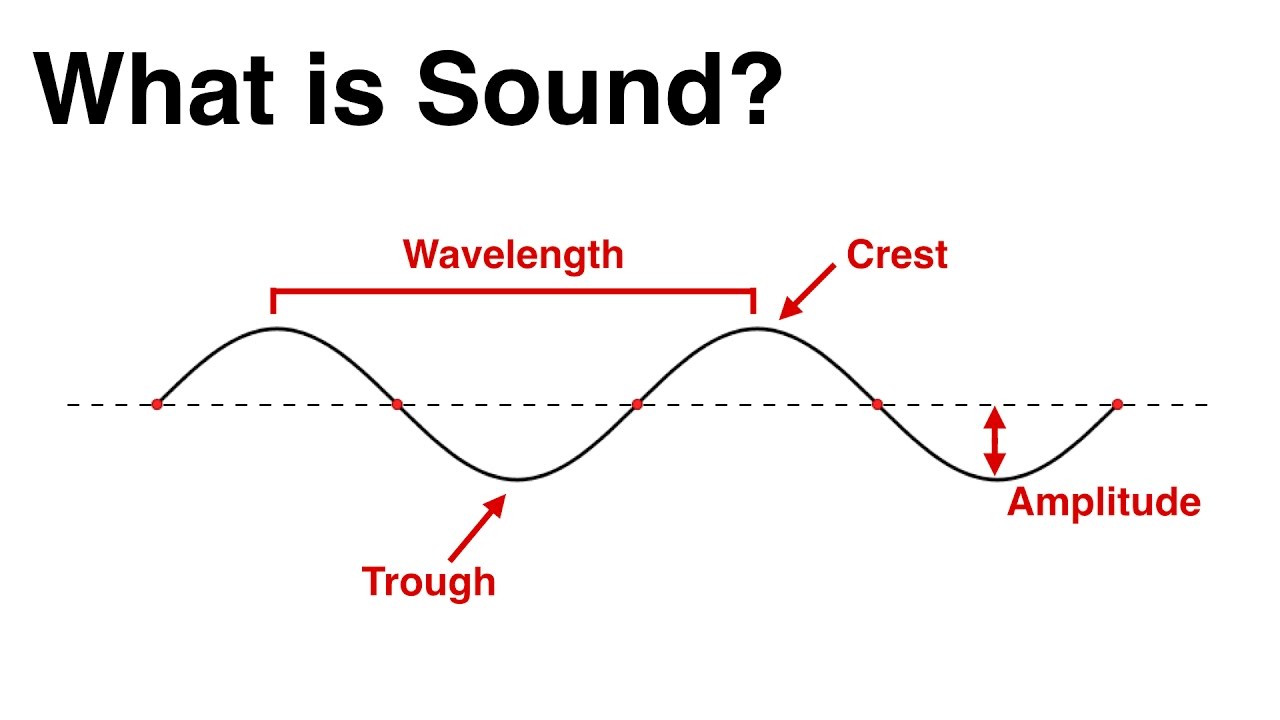
From a physical point of view, sound, in the broadest sense of the word, is vibrations of particles from the environment (air), transmitted from one point to another. The sound propagation process (in a somewhat simplified way) is as follows. Some source (for example, a string of a musical instrument, the membrane of a loudspeaker of a loudspeaker system, etc.) vibrates rapidly with a certain frequency and amplitude. The frequency is the number of repetitions of the oscillation cycle per second, and the amplitude is the maximum deviation of the oscillating body from the mean state, measured, for example, in millimeters.
As a result of the interaction of the sound source with the surrounding air, the air particles begin to contract and expand over time (or “almost in time”) with the movements of the sound source. Then, due to the properties of air as a fluid, there is a transfer of vibrations from some air particles to others
As a result, the vibrations are transmitted through the air at a distance, that is, a sound or an acoustic wave propagates in the air or simply a sound. The sound, reaching the human ear, in turn, excites the vibrations of its sensitive areas, which are perceived by us in the form of speech, music, noise, etc. (depending on the properties of the sound, dictated by the nature of its source).
The greater the amplitude of oscillation of the source, the greater the intensity of the sound waves excited by it (that is, the value of the local compressions and thinning of the air that occur in the sound wave), therefore, more loud is the sound perceived by our hearing organs. Sound intensity in technology is generally measured in decibels, abbreviated dB (dB). The time dependence of the intensity of the sound (Fig. 1.9) is complete information about this sound.
The frequency of sound, as already mentioned, is measured in units per second or, in other words, in Hertz, abbreviated as Hz (Hz). The frequency determines the tone determined by our ear. Small or low frequencies (on the order of hundreds of Hertz) are associated in our consciousness with dull bass and high or high frequencies (tens of thousands of Hertz), with a piercing hiss. Therefore, the human ear is capable of perceiving sound of hundreds to tens of thousands of Hertz, and frequencies lower and higher than the hearing threshold are called infrasound and ultrasound, respectively.
The graph of the dynamics of the intensity of sound waves is its exhaustive characteristic.
Note Derived units of frequency are often used for sound waves: kilohertz (kHz) equal to 1000 Hz and, less frequently, megahertz (MHz) equal to 10 6 Hz. To avoid confusion, keep in mind that megahertz, which They describe the speed of computers, they have nothing to do with sound (they determine the frequency of electrical oscillations in the processor).
In fact, the vast majority of sounds that are familiar to us are not vibrations of a certain frequency, but a mixture of different frequencies or a spectrum. However, some frequencies in the spectrum dominate more frequently, which determines our overall impression of the sound we hear.
So, sound is acoustic waves transmitted in the air, and its main characteristics are frequency and intensity, and a complete recording of sound waves can be recognized as a graph of intensity over time.

