Sampling frequency and depth of bits


Free Download Mp4Gain
picture

Sampling frequency and depth of bits
Frame rate per second

What is the sampling frequency?

Frame Rate

What are the depth and speed of bits?
The sound quality is determined by the sampling frequency and the depth of bits.

When I read the history of sampling frequency and bits frequency on the network, I flood incorrect information.
Some people think subjectively about what frequency is better. There is a definition and a physics suitable for the frequency (sampling frequency) and the bit rate.
It is not something you can guess what is better (laughs)
, so why not study the sound quality mechanism and replace it for the quality of the video?

What is the sampling frequency?
There is something similar to the speed of frames in the world of sound.
That is the sampling frequency.
The sampling frequency is an index that indicates how many times a sound is converted per second when converting an analog signal into a digital signal.
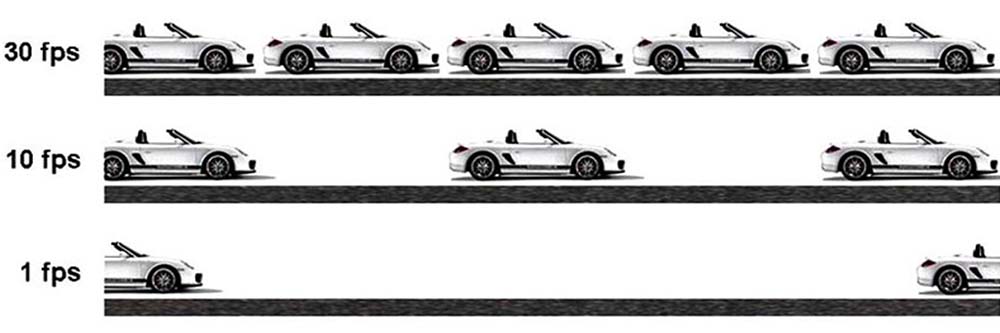
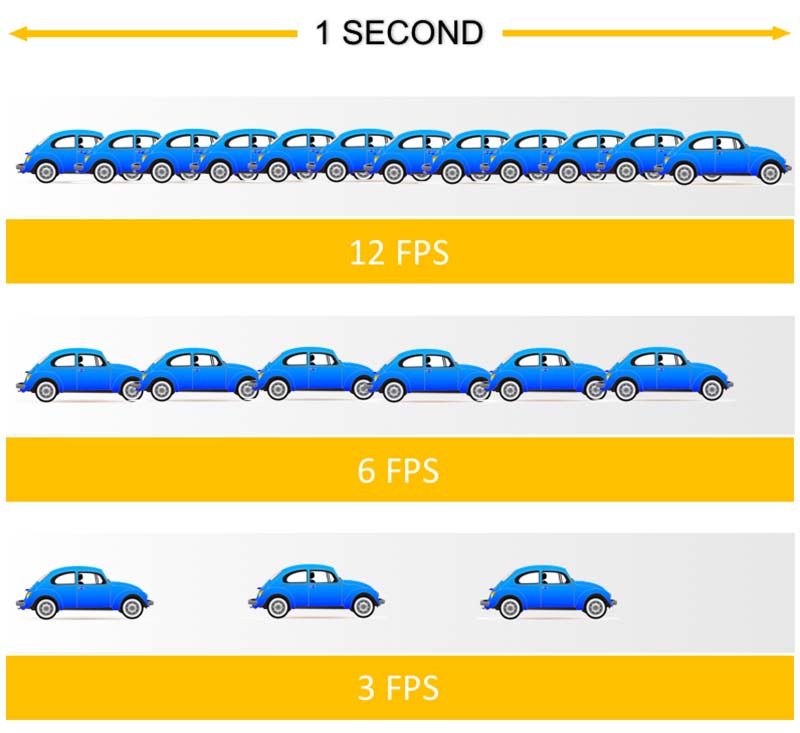
In terms of video, 24 fps has 24 photos aligned in a video of 1 second.
In terms of voice, 44,100Hz means 44,100 digital sound samples are aligned in a second sound.
The unit is Hz.

Reference source: https://pixabay.com/en/equalizer-eq-sound-level-digital-255396/

By the way, the conversion is called AD conversion (analog to digital conversion abbreviation).
I think this meaning is difficult to understand and the information is complicated.

It is said to be standard only after converting the analog signal to digital 44,100 times per second, so the human ear is strange! That’s why.

By the way, the “sampling frequency” is the “frequency of frames” in the video.
To deepen the understanding of the sampling frequency, I will replace it with a video and continue with the story.

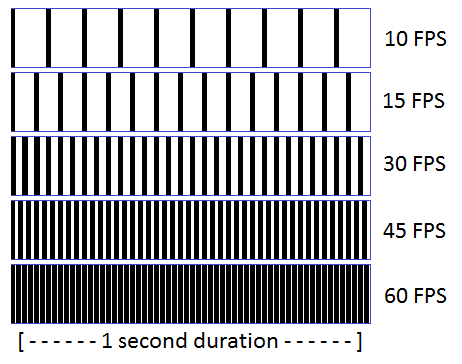
The frame rate of a video is called FPS (frames per second) and is expressed using the unit of how many photos are displayed per second.
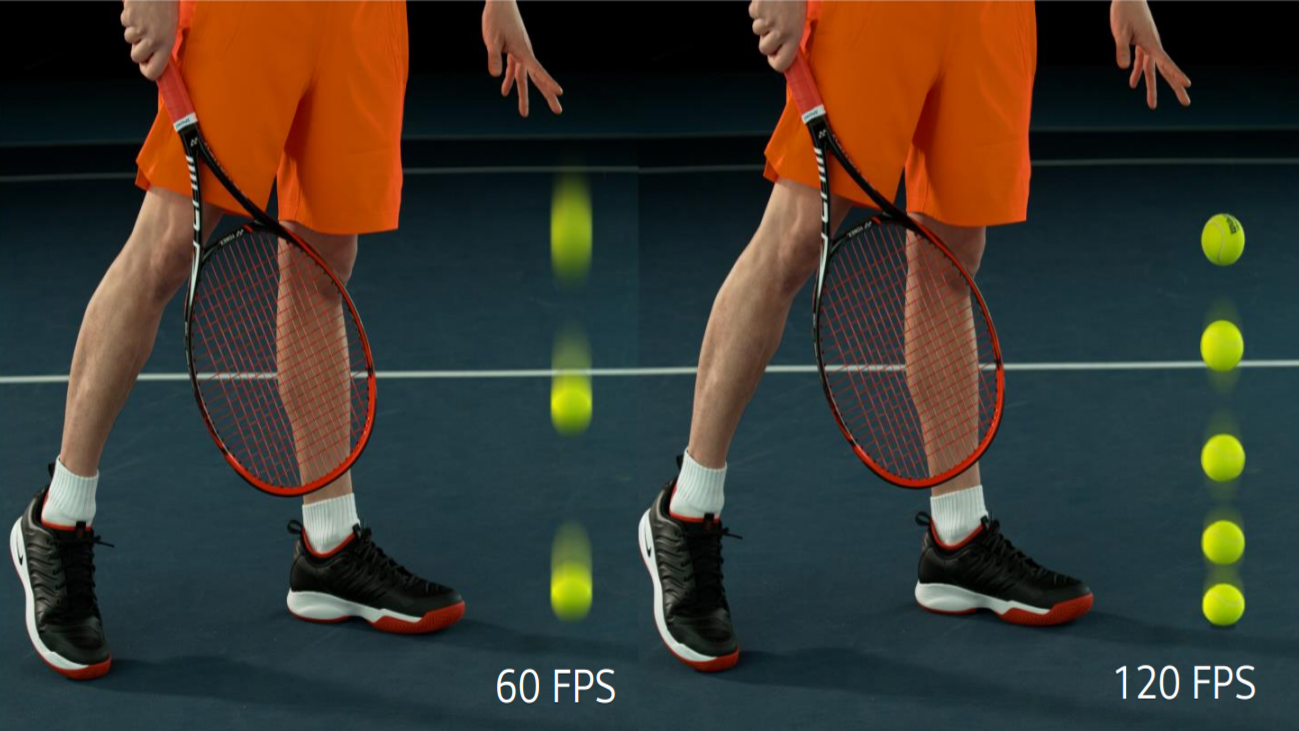
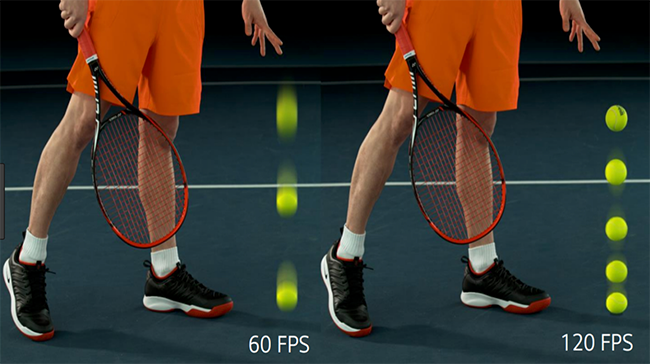
And the video is more fluid at 30 fps and 60 fps than at 24 fps.

In other words, the greater the sampling frequency, the softer the sound will be.
The sound is the same and 48,000 Hz is softer than 44,100 Hz.

Before talking about what sound he prefers, first understand what sound the highest sound quality has by definition.
This is important.
By the way, it is important to understand the difference between 44,100Hz and 48,000Hz by making images.

VOOK article link “The difference between 44,100 Hz (music industry) and 48,000 Hz (video industry) that you get to know”

Did you know the sampling frequency?

What are the depth and speed of bits?
Remember only two more terms.
That is “depth of bits” and “bit speed”.
Be careful because names are similar but not equal.

These three words are simply expressed like that.

Sampling frequency (Hz) x Bit depth (bit) x Number of channels = BITS speed (BPS)

The best-known CD bit rate is 44,100 Hz x 16 bits x 2 channels (stereo sound) = 1411200 bits = 1411.2 Kbps


Free Download Mp4Gain
picture


Mp4Gain Main Window
picture


Mp4Gain Features
picture


Free Download Mp4Gain
picture

What is a frame rate? Part 2

What is a frame rate? Part 2

FPS

Video coding and bit rate

fps

The coding method is also related to the image quality of the video.

When compressed a video, the image quality of the video is determined by the amount of data processed per second, which is called a bit rate.
The same happens with the voice.
This includes both video and audio, so the video bit rate is the sum of the video bit rate and the Audio Bit Rate.
If you configure both at a high bit rate, you will get a beautiful video and video audio, but the size of the video will be great.
In addition, since the bit rate is fixed in a general compression method, if the frame rate increases at the same bit rate, the number of bits in the frame will be reduced accordingly and the quality of the image will deteriorate.

There is also a method called a variable bit rate, in which the bit rate increases when the movement is large and the bit rate decreases when the movement is small, but this requires a large amount of CPU processing for compression / decompression .
In any case, if you do not have enough bandwidth to send and receive, you must maintain the video bit rate at a certain level, and if you do something better, something will go wrong.

Video of the next web conference
First, starting in 2019, the bandwidth of the network is up to 2 Gbps even for domestic lines and optical lines.
Video compression methods are also evolving. For example, as of 2019, H.264, which is a general video compression method, it has double compression speed that MPEG-2, which is a conventional compression method for DVD, etc. That the compression rate will double in H.265, which will be formulated below.
In other words, it can be said that the environment to send and receive videos created at a higher bit rate is much better than the videos used in conventional web conferences.

In the future, it is expected that new systems and improved systems allow higher quality web conferences for both video and audio.
In addition, it will increase the number of people who can participate and the screen, and it will be possible to make a fairly large web conference.

What is a frame rate?

What is a frame rate?

FPS

The rate of frames is the amount of frames that processes a video at a certain period of time (usually 1 second) and is related to the image quality of the video.

fps

This article describes the speed of frames.

Table of Contents

1 speed of frames, video and frames
2 Frame and web conference speed
3 Video coding and bit rate
4 Video of the next web conference
Frame speed, video and frames
Have you ever wrote an animated book on the edge of a notebook when you were a child?
It is a sleeve that seems to be moving when you change the image little by little and pass the pages.
Actually, the beginning of the video image is the same as that of this animated book.
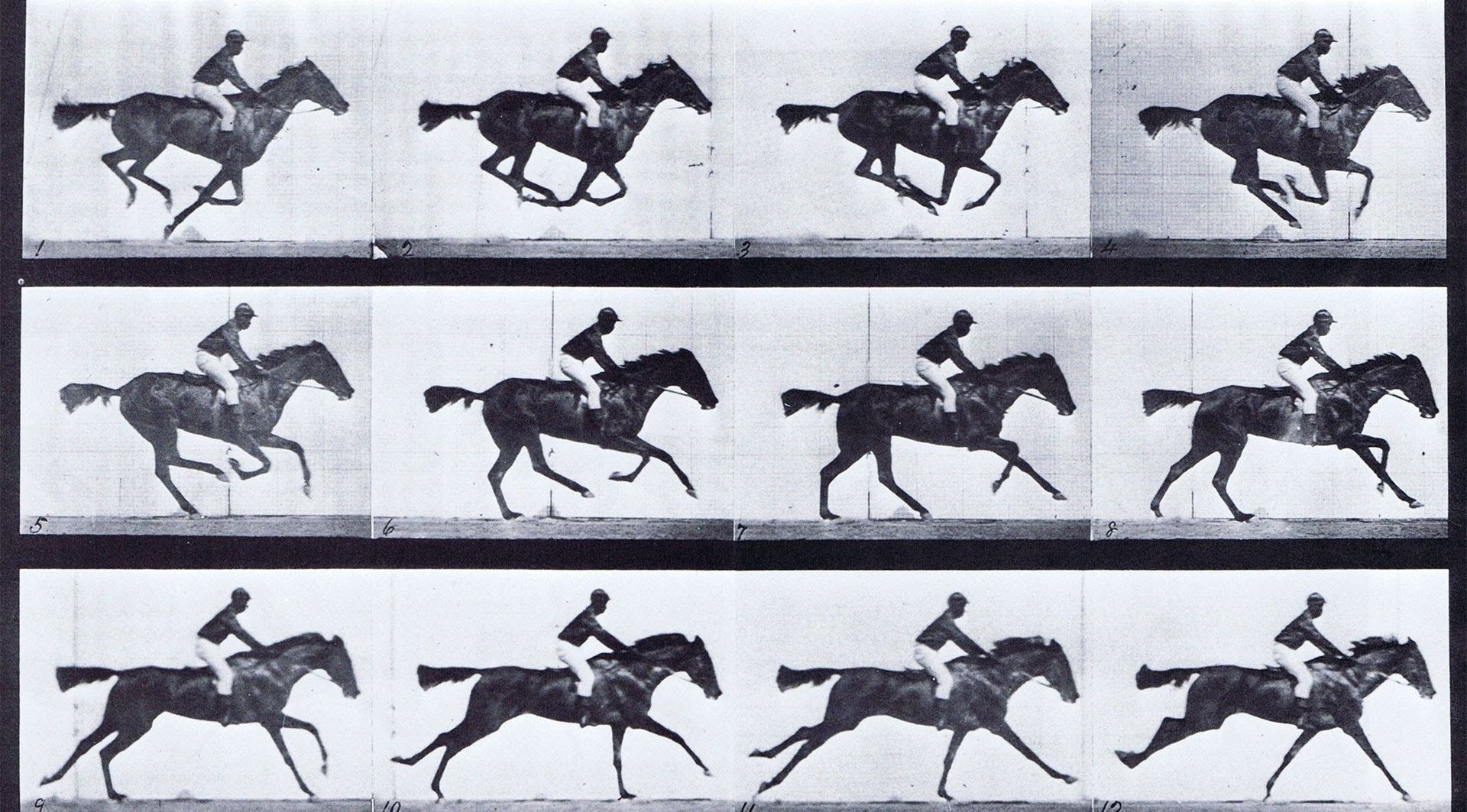
It is said that the film was thrown into the public as a cinematographic film invented by the Lumiere brothers.
The principle was to record 16 images per second in film, print them and reproduce them to record and reproduce the images.
At first, it was a video called silent without audio, but eventually it became a video called Talkie with audio.

At this time, 24 images per second are required to record audio, and the concept of frame speed is born for the first time.
The frame rate is the number of frames (still images) that can be processed per second, and Normally FPS (frames per second) is used, which is the number of frames that can be processed per second.
Since the talkie requires 24 frames per second, the frame rate is 24 fps. The higher the speed of frames, the softer the movement will be, since more frames can be used to reproduce the same movement.

However, increasing the frame rate increases the number of frames processed per second, which results in a large number of film.
Therefore, 24 fps has become the standard for movies.
The next is the birth of television.
There are standards for televisions called PAL and NTSC, but the frame rate is 25 fps for PAL and 29.97 FPS for NTSC.
And in the latest 3D games, etc., the frame rate has increased to 60 fps.
As the content that requires a high speed of frames, such as 4K televisions and 3D movies, it will continue to increase, 120 fps videos are expected to appear.

Frame rate and web conferences
At 15 fps, it is not unnatural if you can only see the upper part of the person who attends the conference, as a web conference, and the movement is not so violent. In addition, in web conferences, audio is more important than video.
In a meeting, the video can be an extreme still image, but the meeting can not be done unless the audio is clearly transmitted.
In addition, since it is necessary to send video and audio in real time, the video frame rate tends to be as low as possible.

It seems that many general web conference systems send videos at 15 fps.
However, some modern systems also admit HD image quality at 30-60 FPS.
Of course, you need a line that can send and receive that amount of data, but you can expect more clear and clear images than conventional web conferences.

What is bit rate and frame rate? Part 2

What is bit rate and frame rate? Part 2

FRAME RATE

What is a video codec?

Frame Rate

Now, let’s move on to the next concept: video codec. When I said that if you lower the bitrate, the video quality will be lower. This is actually a somewhat simplified approach as there are several compression methods.

Yes, if you compress a video one way, then actually the lower the bitrate, the worse the video quality will be. But scientists have found another way out – the use of various compression methods.

That is, having the same bit rate, that is, at the same video bit rate, but using different encoding methods, we will get a different video quality.

Video codec is a method of compressing video. You have probably heard of various video formats. MP2, MP4, H263, H265, HEVC. They all mean different ways of recording and compressing videos.

Therefore, by recording video in a different data format, we can get a different video quality with the same size. Well, or of a different quality, the same size.

See also: Basic rules for video composition.
Why is there no universal video codec?
The question may arise: why do we need different video codecs?

Progress in creating video compression algorithms is not stopping. Even when it comes to video compression mechanisms. For example, PAL and NTSC standards appeared for the first time. Each of them had its own compression standard. Later, HD appeared, then UHD appeared.
The progress in video compression also depends on the progress in video processing. For more powerful compression algorithms, you need more processing power. In modern televisions and computers there are much more powerful processors than before. This allows more complex algorithms to be used.
Conclution
I understand, at first it will be a bit difficult to understand all these concepts. But, if you want to get a good video, then this theory will be necessary for you. This will help you figure out how to get high-quality videos in the smallest size.

In addition, it will allow you to avoid common mistakes when using different video codecs. That is, for example, you recorded a video using a codec, but your client or simply an acquaintance does not read your video. This is all that is to blame for the video codec.

What to do in this case? There are two development options. The mountain goes to Mohammed. Or Mohammed goes to the mountain. You can redo the video in a format that will be read by your viewer. Or you can put an additional program, a codec, for your viewer, and the video will play.

In practice, it is better to immediately record videos in the most common formats. Or recode the video to a different format. For example, using a video converter.

What is bit rate and frame rate?

What is bit rate and frame rate?

frame rate

What is a video file, what is a frame, aspect ratio, and finally what is the bit rate?

Frame Rate

What is a video file?

Video, like cinema itself, is a rapid alternation of images. How fast is it? For a human, there should be 24 images per second. In this case, images that change quickly become moving. This is what cinema and now video are based on. Also, each image has several properties. Which? These are the width and the height. For video, these quantities are measured in points. So many points in width and so many points in height.

What does the video consist of?

If we zoom in on any frame in our video, then we can see the individual squares that make up our image. Each of these squares received the name – “Pixel”, which comes from the English – “Element of images”, that is, an element of the image.

Pixels on the screen

So when we look at the properties of the file or the properties of the project, we see the video formats in which it is indicated how much is the height of the box and how much is its width.

video aspect ratio

In the image, we see that the width of the frame is 1920 pixels and its height is 1080. It is clear that the more pixels there are in our frames, the more details can be accommodated. And consequently, the better the image will be. And don’t forget that the frame rate must be at least 24 frames per second.

Older video formats, such as the PAL standard, consisted of 720×576 pixels. Modern HD or Full HD, already 1920 x 1080. The 4K format already has 4096×2304 pixels, and the most recent 8K format is 7680×4,320. That is, the further, the better quality is achieved.

Video aspect ratio.
This is also the parameter that for many is almost a thing of the past. The fact is that before there was a television format that had a 4/3 aspect ratio, and a wide-screen format, mainly for watching movies, that had a 16/9 ratio.

Monitor with 4×3 aspect ratio

Now the television format is a thing of the past (almost) and only the wide format remains

Monitor with a 16 x 9 aspect ratio
What is the video bit rate?
Like I said, each frame is made up of a large number of pixels. If we try to put this amount on our hard drive, it will take up too much space. In fact, the arithmetic here is simple. Let’s count.

One frame – 1920×1080 = 2,073,600, that is, two megabytes (actually, this is not entirely true, but I’ll simplify it a bit)

That is, we now know that a painting we have weighs 2 mb. It seems a bit, but let’s keep counting.

One second. There must be at least 24 frames in one second. What do we get? 24×2 = 48 mb.

One minute. 48×60 = 2880 mb. I mean, think about it. In one minute, almost 3 gig! Well, how long will an hour take then?

One hour 2880×60 = 172800 mb. In other words, a one-hour movie will occupy 172 gigabytes of memory.

Well, since such a thing will not work, smart people decided: it is necessary to squeeze. We need to compress the video to fit everything on a computer, on a phone. What can be seen on the Internet, etc. And that is why there are various video formats. Since each format has its own rules for compressing video.

But here we come to the concept of bitrate.

Bitrate: read / write speed. You are recording a video. The video camera matrix takes measurements of light, that is, it measures pixels. Transfer them even further, to a USB flash drive or SSD. The speed of this transmission is the bit rate.

Next, we watch the video. At this time, the data is read from memory and transferred to the monitor / screen. Once again, we are faced with a certain data rate.

But in the video, the function of the bitrate value is somewhat different. Video Bit Rate: The compression rate of the video. When video is recorded from the matrix, the signal is immediately encoded and compressed. The more the signal is compressed, the less space it takes up, but at the same time, the lower the quality.