
Comparison of lossless music formats
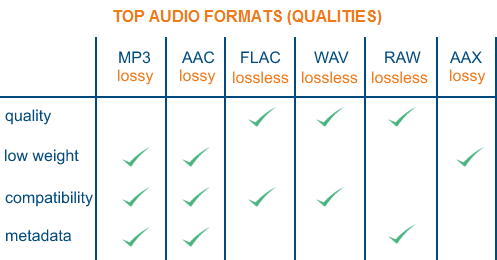
which is better, Flac or Ape or Wav?
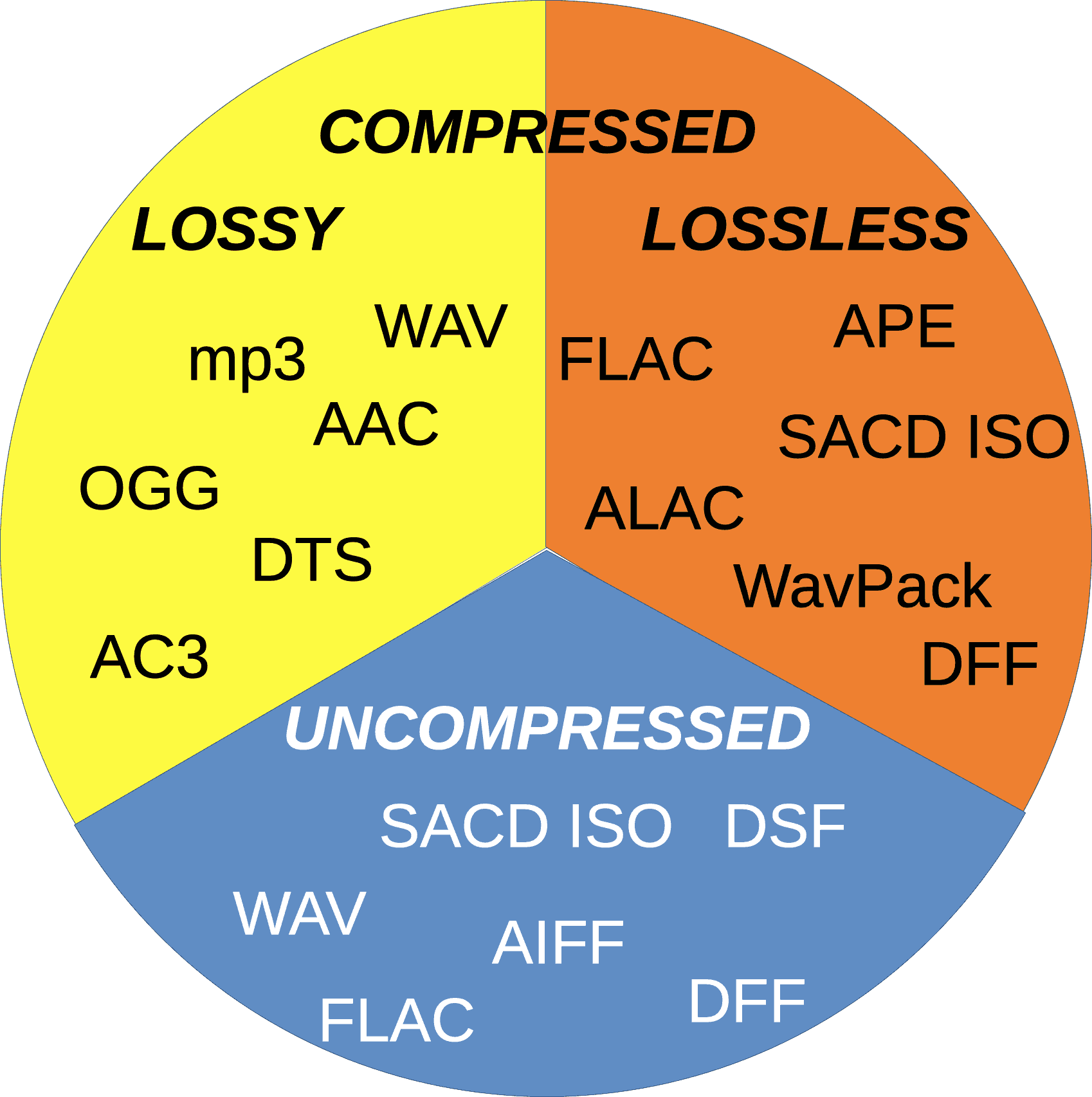
lossless music formats
WAV is a sound file format developed by Microsoft. It complies with the RIFF (Resource Interchange File Format) file specification and is used to store audio information resources on the Windows platform. It is widely compatible with the Windows platform and its applications. also supports MSADPCM, CCITT A LAW and other compression algorithms, supports a variety of audio numbers, sample rates and channels. WAV file with standard format is the same as the CD format, with a sample rate of 44, 1K and 16-bit quantized numbers, so the quality of the sound file is almost the same as a CD.
FLAC is short for Free Lossless Audio Codec, which can be interpreted as lossless audio compression coding in Chinese. FLAC is a well-known free audio compression codec, which is characterized by lossless compression. Unlike other lossy compression codes such as MP3 and AAC, it does not destroy any original audio data, so it can restore the sound quality of music discs. It is now compatible with many software and hardware audio products.
APE is one of the popular digital music file formats. Different from lossy compression methods like MP3, APE is a lossless audio compression technology, that is, after the audio data file read from the audio CD is compressed into APE format, the format file APE is restored and audio data restored The file is restored The audio file is exactly the same as before compression, without any loss. The file size of APE is about half that of CD, and APE can save a lot of resources.
ALAC is short for Apple Lossless Audio Codec. It is a lossless audio format developed by Apple. Apple has released the “Apple Lossless Audio Codec (ALAC)” under the Apache License v2.0. For more information, see the ALAC format entry.
TrueAudio is a free and simple real-time lossless audio codec. TTA is a lossless audio compression based on adaptive predictive filtering that can have the same or better level of compression than other major formats, while maintaining higher bit rates.


