
Is bass important in audio?

High-end audio
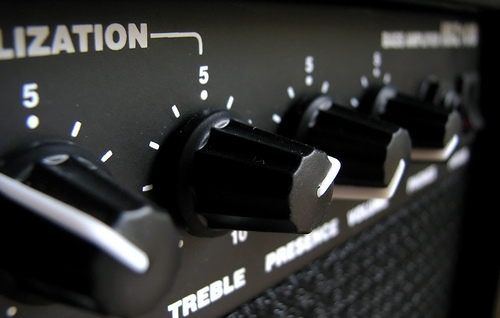
What kind of sound does “good sound” mean in audio?
From a technical point of view, there are terms like “less noise” and “wide dynamic range”.
Dynamic range in audio is the range of strength and weakness of sound that can be expressed by audio, but it is an important concept when considering sound quality. There is no correct answer for
a good sound in which you can feel the delicacy that is well balanced in all ranges, an interesting sounding sound with something outstanding and a good sound.
Even if people say so, my sound is the cutest in the world! I think there are a lot of audiophiles who are deep in their hearts ^^
However, when listening to multiple audios, sometimes I feel that something is wrong even though the dynamic range is wide.
But I should have achieved numerically high sound quality, I did not feel carefree about the performance, I feel like, false, to reverse the treble and bass contour is too clear the
original music as a factor to be considered. means that there is some distortion between the harmony of the sound and the sound to be played.
It’s good to look for a clear sound, but I also want to look for a sound that fully conveys the feelings and emotions contained in the music.
In this article, I will talk about the essential and structural aspects of sound and how to enjoy audio using it.
Table of Contents
1 What is sound in the first place? From a scientific point of view …
1.1 What is sound? Air pressure change
1.1.1 Pure tone / complex tone / noise
1.1.2 Treble and Bass Characteristics
1.2 How humans recognize sound
1.2.1 How you listen depends on the frequency! Equal volume curve
1.2.2 Does sound control sound? Masking effect
1.2.3 Cocktail effect to select and listen to the sound you want to hear
1.2.4 Sound method
2 Enjoy an audio experience that takes advantage of the treble, middle and bass characteristics!
2.1 The midrange is easy to hear and compare even for beginners
2.2 Design concept of the loudspeaker unit
2.3 Here is the listening point where the treble and bass overlap
2.4 Techniques for adjusting the range by absorption and location of sound
3 Summary
What is sound in the first place? From a scientific point of view …
Sound waveform image
When choosing an audio device, engaging explanations of specs and word of mouth are helpful as well, but I think the actual display and the feeling of likes and dislikes are great too.
Also, if you can make a judgment that takes into account the universal nature of sound, you can make a decision that you won’t regret.
“Shuhari, Shuhari, and Shuhari” are common, and because there are basic concepts, you can feel the fun of chasing and playing by removing the form.
If you know the basics of sound and how to perceive human sound, you can approach audio from a different perspective.
What is sound Change in air pressure
For example, when you hit a drum, it makes a sound.
Although it is very slight, the membrane of the drum vibrates repeating a quivering movement like a spring.
This vibration causes a change in air pressure and the vibration is transmitted radially.
The vibration at this time becomes a sound.
Sound is transmitted through air as a medium, so it cannot be heard in a vacuum without air.
This change in air pressure is transmitted to our ears and is recognized as sound.
All musical instruments make sounds by vibrating the air in some way.
Audio speakers are often compared to musical instruments, but the principle is the same as for musical instruments because the interior is hollow like a drum and the air vibrates according to the transmitted electrical signal to produce sound.
In addition, the speaker is a delicate musical instrument because the sound becomes familiar with the shooting and use.
Pure tone / complex tone / noise
There are many types of sounds in everyday life, but the simplest is “pure tone.”
It vibrates with a regular waveform and the pure tones are like elementary particles of sound.
Pure tones rarely exist in musical instruments and everyday sounds, but pure tones include the beep tones used in television and radio weather reports and the tuning fork sounds used to tune instruments. musicals.


