
Explanation of video formats: MOV, AVI and others at a glance

Videos can be found everywhere, on platforms like Youtube or Vimeo. But why can you play some videos only on certain devices, some take more and some take less space or what about file extensions like etc, everything?
The reason for this is that each video is saved in a specific video format. The available video formats and the functions or certain properties they have are explained in more detail in this article.
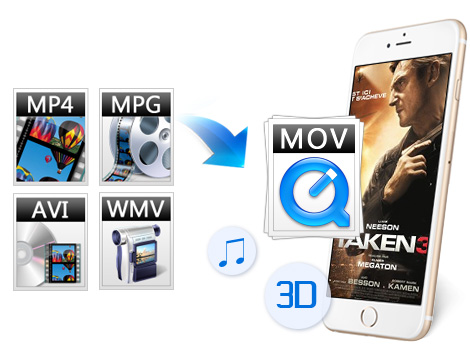
Why are there different video formats?
The number of different video formats is high, the reasons for this are quite simple.
While initially the goal was only to stream movies, today video quality and size are deciding factors. Many people now value efficiency. You want to achieve the highest possible video quality, but still keep the file size small.
This efficiency can be achieved through technical development, which is another reason for different video formats. Because something has always been improved, so that new formats have appeared again and again. There are also different developers who have created formats with different properties for their own software.
conclusion
Most streaming sites, such as YouTube, now support a large portion of video formats. For certain DVD players, however, it is important to select the correct formats.
You can always know what video format your smartphone creates by the corresponding file extension when the file is saved on PC. It is difficult to say which is the best or the smallest video format, because each video format has its advantages and disadvantages.
1. What is Avi?
The AVI video format developed by Microsoft is the most widespread format that can be played on almost all devices, such as a DVD player.
It is used for the transmission of data and the storage of data streams. This technology combines image, sound and subtitles to play them synchronously.
Thus, different movie formats can be converted to AVI format, so that they can be saved and opened in many operating systems such as Linux, Mac, Windows, etc.
Unfortunately, however, with a small loss of quality and up to 20 times more storage space than other compressed files, such as the MPEG file.
2. What is MOV?
The file extension “mov” is a standard video format. It was developed by Apple for QuickTimePlayer and contains multiple tracks that can be encoded with various codecs.
What is meant by codec is that it encodes and decodes data and signals.
The mov format has a high level of compatibility, so it can be used with many operating systems and only takes up a small amount of memory.
However, compression is subject to loss, which has the disadvantage that the quality of the mov file is not as high as that of the original video.
3. What is MP4?
Based on Apple’s QuickTime Player, the MP4 format replaces most of the older data formats and can only be played on newer devices thanks to the independent codec format.
Developed by the “Moving Picture Expert Group (MPEG)”, this video format not only combines multimedia content such as images, sound and subtitles, as is the case of the AVI format, but also 2D and 3D graphics. In addition, this format is characterized by better quality, but it also requires greater computing power.
4. What is WMV?
WMV, which is short for Windows Media Video, was developed by Microsoft, and as the name suggests, it can only be used by Windows. WMV has the advantage, similar to the MPEG format, of compressing the video image in such a way that the file size is reduced, but the quality does not suffer. WMV is particularly suitable for WEB videos, as these videos load very quickly due to their small compressed size.
However, this format cannot be easily played on mobile devices such as Apple or DVD players, so it is not suitable for standard video streaming.


